Sunday, March 30, 2008

Muqtada as Sadr Blinks

Sunday, Muqtada as Sadr ordered his militia, the Mahdi Army to pull out of the street fighting in Basra and Baghdad. The Shi’ite leader issued a statement via his office in Najaf. "We want the Iraqi people to stop this bloodshed and maintain Iraq's independence and stability," said a statement bearing Sadr’s seal. "For that we have decided to withdraw from the streets of Basra and all other provinces."

He said it was his "legitimate responsibility to stop the bleeding of Iraqis, to maintain the reputation of Iraqi people, the unity of land and people, to prepare for its independence and liberation from the dark forces and to quell the fire of division by the occupier and its followers." Sadr also distanced himself from those "who carry weapons and target the government, the offices of the government and its parties." However, he demanded that the "random" arrests of his followers must be stopped by Iraqi governmental security forces.

Iraq’s Prime Minister, himself a Shi’ite, welcomed Sadr’s order as a “step in the right direction.” Maliki has personally been directing the government offensive in Basra.

The same can not be said of Muqtada as Sadr. Sadr has spent most of the last year living in Teheran, Iran and commuting several times a week to Qom. There he is undergoing religious studies in the city’s famous Shi’a seminaries. It is an effort to enhance his religious credentials. It is thought that he issued his order to the Mahdi Army from Qom.

Leadership by fax when his militia is engaged in heavy combat with Iraqi, American and British forces will undermine his military credentials among his followers who have suffered hundreds of casualties. The same happened in their fighting in 2004. Then, like now, when his forces were losing - he blinked. This will have important consequences for the future of Iraq.

Friday, March 28, 2008

Wrap Up of a Busy Week in the Middle East

This last week has seen some interesting developments and the coming weekend may be a bit anti-climatic. Early in the week, US Vice President Cheney visited the region. He talked about oil, Iran, Syria/Lebanon, and finally the Palestinian/Israel situation.

In Yemen, Fatah and Hamas signed a reconciliation agreement. The Yemeni agreement is a framework for a dialogue between Hamas and Fatah that, in theory, returns the situation in both Gaza and the West Bank to the status that existed prior to June 2007. Supposedly, there are no preconditions to the start of the cooperation. The office of Palestinian President, Nabil Abu Rudaina, said that the deal would remain invalid until Hamas renounces its control over the Gaza Strip.

Thursday, seventeen of the Arab League’s 22 member states sent their Foreign Ministers to Damascus for preparatory talks ahead of this weekend’s Arab Summit. Syria called on the ministers to abandon the 2002 Arab peace proposal. In a major defeat to Syria, it was agreed at the meeting that the Saudi-sponsored peace initiative would remain the basis for Arab peace engagement with Israel.

Israel for its part announced that it was trying to restart peace talks with Syria. PM Olmert and another of his ministers separately told reporters about the new initiative.

Iraqi PM Maliki issued ultimatums to Shi’a militias in Basra to surrender within 48 hours and then backed up and extended it to ten days. It is unclear whether he had to do that because of political pressures or military exigencies.

Friday, U.S. Secretary of State Condoleezza Rice departed for the Middle East. She is scheduled to meet with Palestinian PM Mahmoud Abbas and other Arab leaders during her week-long trip. Abbas today met with Jordan’s King Abdullah ahead of his meeting with Rice and then went to Damascus.

Also today, Admiral William Fallon, the Commander of US Central Command stepped down after just one year on the job and into retirement following a long career. His public political statements and approach to Iran are believed by many to have been at odds with Washington’s civilian leadership. He was replaced temporarily by his deputy, US Army Lieutenant General Martin Dempsey.

Finally, the UN issued its 10th interim report by a panel headed by Canadian former prosecutor Daniel Bellemare saying a "criminal network" of individuals acted together to carry out the 2005 murder of Lebanese ex-premier Rafiq Hariri and many other attacks against anti-Syrian Lebanese figures perpetrated between October 2004 and December 2005. Bellemare was appointed in November to replace the Belgian Serge Brammertz as head of the UN group working to uncover who was behind Hariri's death in a Beirut car bombing. Brammertz' German predecessor, Detlev Mehlis, implicated senior officials from Syria. Damascus has denied any connection with Hariri's death or 20 attacks against anti-Syrian targets in Lebanon.

All these events set the stage for another failed Arab Summit set to commence Saturday in Damascus. Yemen, Iraq, Lebanon, Saudi Arabia, Bahrain, Morocco, Oman, Jordan, and Egypt will all send low-level delegations. Syria’s Foreign Minister inferred that those countries constituted an “American virus” and that their absence was a positive thing. In reality, it shows Syria’s increasing isolation, not only over Lebanon but also over its continued willingness to follow Iran’s lead at a time when the Arab states are nervous about Iran’s intentions in the region. The fact that Damascus trumpeted today’s arrival of the President of the Comoros Islands shows how desperate they are to give the appearance that a summit is actually taking place.

Tuesday, March 25, 2008

Syrian-Lebanese Dance of Chaos Continues

Lebanese Parliamentary Speaker Nabih Berri has again postponed an important Presidential Election session. A parliamentary session scheduled for today in order to elect a new Lebanese President was cancelled and has now been re-scheduled for noon on April 22d. This is the 17th such cancellation.

Parliament has so far been unable to elect a replacement for pro-Syrian head of state, President Emile Lahoud. His term ended in November, and Lebanon has been without a president for over three months.

The latest delay may have been induced by reports that Syria recently moved three Army Divisions close to the Lebanese border.

Meanwhile, the United States has deployed three warships, including the destroyer USS Cole, to Lebanese and Syrian coastal waters. The U.S. says the ships will remain there until after a successful Lebanese Presidential Election takes place.

Damascus obviously wants a pro-Syrian President but right now Damascus doesn’t want the distraction of an election. Syria is focused on hosting an Arab Summit this week. This was to be a political plum for Syria. But it is back-firing, as Egypt and Saudi Arabia have announced that they are sending low-level diplomats to the meeting in retaliation for Syrian obstruction of the Lebanese Presidential election. Other Arab states are likely to do the same. Many Arab nations are bent on isolating Syria who has increasingly been improving its relations with Iran.

Saudi Arabia, long an important player in Lebanon and Syria, announced yesterday that neither King Abdullah nor Saudi Foreign Minister Prince Saud al-Faisal would attend the summit. Riyadh's ambassador to the Arab League, Ahmad Qattan, said he would head his country's delegation.

To add to the tension, Monday was the end of the 40 day mourning period of the death of arch-terrorist Imad Mughniyeh. He was killed in Damascus in a February bombing. Syria’s Hezbollah allies held bellicose demonstrations and gave speeches saying they would avenge his death. They accuse Israel of having assassinated Mughniyeh. These threats and Syrian troop movements have made Israeli officials concerned.

Thus the stage is set for another failed Arab Summit and a protracted period of political impasse in Lebanon.

Wednesday, February 27, 2008

Abu Dhabi Camel Festival


The Mazayin Dhafra Camel Festival 2008 will take place in Abu Dhabi’s Western Province 2-5 April. It is part of efforts to promote local culture and folklore.

The festival will take place in Zayed City under the sponsorship of Sheikh Mohammed bin Zayed Al Nahyan, Crown Prince of Abu Dhabi. During the festival there will be a ‘camel beauty contest’, musical performances, sporting events, and displays of Emirati handicrafts.

The event will attract a large number of participants for other Gulf States (mostly from Saudi Arabia, Qatar, and Kuwait). Abu Dhabi hopes to make the festival into a large annual event as a way to preserve the role of the camel as an important part of Arab heritage.

The festival will have special shows for ‘Asayel’ (pedigree) and ‘Majahim’ (dark-colored) camels. Participating camels will be judged based on age groups. Breeders/owners can show more than one camel.

Similar Camel Festivals take place throughout the Arab world. Well known ones include the fairs at Goulimine, Morocco and Douz, in southern Tunisia. Most of the Gulf States hold major camel races as well.

Saturday, February 23, 2008

Turkey invades Iraq in surprise wintertime attack on the PKK

Iraq’s Foreign Minister Hoshyar Zebari has protested Turkey’s military incursions into Northern Iraq aimed at guerrillas of the Kurdish PKK terrorist group that is fighting for an independent Kurdish state. Zebari, himself a Kurd of Mr. Barzani’s Kurdish Democratic Party, decried the infrastructure damage and a lack of coordination and notification concerning the attacks. He said five bridges, including an important bridge over the Zab river, had been damaged despite previous Turkish assurances to Iraq that they would not damage infrastructure in their on-going battles with the PKK. He said Iraq had not been informed about the attacks.

It should be noted that the American White House acknowledged that the U.S. had been informed of the attack ahead of time but had urged restraint on the Turks. This will undoubtedly put some strain on the recently established arrangement under which Iraq, Turkey, and the United States share intelligence on the activities of the PKK.

The attack started just before noon on Thursday with a multi-hour air and artillery bombardment of suspected PKK facilities in isolated areas of northern Iraq. The attack reportedly caught the PKK completely by surprise and Turkey said more than a score of guerrillas were killed in the bombardment and many leaders were noted to be fleeing the border region to the south. Turkey has never before conducted a major operation against the PKK in mid-winter. Both sides usually sit out the winter and resume their operations when the snows melts in the spring.

Just after dusk, Turkish troops crossed the border on land. Some were also transported by helicopters into the rugged, snow covered mountains. Fighting has been centered around Hakurk and Sidekan, just south of the Turkish border town of Cukurca. Additional fighting has been reported in and around Bamerni, which is about 25 miles further west.

Turkish press reports say as many as 10,000 troops were involved in the multi-day operation but Zebari said only several hundred had crossed into Iraq. In what may have been an attempt at deception, the Turkish news also announced the return of their troops to their barracks on Friday, but afterwards Turkish artillery attacks resumed that evening and some fighting has been reported on Saturday.

Turkey claimed to have killed at least 79 members of the PKK and to have lost five soldiers in the fighting. The PKK say they have killed 24 Turks and had five of their fighters wounded. Given that much of the fighting has taken place by aerial and artillery bombardment, it is safe to say that neither side has a good idea of what damage they have inflicted on the other side. Turkey said nearly 4,000 PKK fighters had been in winter camps in the otherwise mostly uninhabited and inhospitable terrain.

Thursday, February 14, 2008

Two Assassinations, a Summit, and Syria


A funeral took place in Beirut today for the few charred remains of the ruthless terrorist, Imad Mugniyah, of Hizballah, who was killed yesterday in a car bomb in Damascus. It took place on the third anniversary of the yet unresolved assassination of Rafiq Harriri, Lebanon’s the Prime Minister. Both murders remain unsolved although there is ample speculation as to who is responsible for both events.

Yesterday, a bomb shattered the normally peaceful Syrian Kafr Soussa neighborhood. The blast and plume of dark smoke could be seen and heard at the America Embassy. But so far no one has walked in there to claim the $5 million dollar reward offered by the USA for Mugniyeh’s arrest. Since assassination is forbidden by US law, it is not a suspect, despite more than ample justification for wanting to see Mugniyeh dead.

The main suspects are listed by most MidEast pundits as Israel (a natual and automatic suspect), Lebanese anti-Syrian forces, and Syria itself. Ironically, Syria is suspected of killing Mugniyeh to eliminate an embarrassing link to terrorism and thus win some appreciation from those who think Syria was behind the Harriri killing. The timing would suggest someone in Lebanon trying to embarrass Syria over Harriri and the blocking of Presidential elections.

The Arab League’s Chief Amr Mousa has been trying to resolve the political impasse between Syria and Lebanon for some months without the slightest iota of success. Meanwhile, bombings in Lebanon have targeted anti-Syrian and American personalities.

Bombings of any kind are rare in Syria. This latest one follows close on the heels of an Israeli bombing attack on a yet to be explained facility in the desert. That attack and now a bombing in a populated area under score Syria’s shady dealings with the likes of Hizballah, Iran and North Korea. Mugniyeh was also known to be in contact with al Qaeda in Iraq.

Syria has been very mute in its response. Hizballah has threatened war and retaliation on Israel. Given the damage done to Hizballah and Lebanese infrastructure in the last war with Israel, there won’t be much enthusiasm for that by any but a few.

Two unresolved assassinations, political turmoil, and risk of war. These are just some of the subjects to be confronted by the 2008 Arab Summit in Damascus next month. Hopefully, the wise leaders among the Arabs will look at the region’s chaos and question the value of allowing terrorists to remain in their midst and will vote to free their societies of the blight of terror and assassination.

Monday, February 11, 2008

Egyptians went crazy this week


Thousands of Egyptians went wild in the streets this week but it was not a political protest. They were celebrating Egypt’s win in the 2009 Africa Cup of Nations football tournament in Accra, Ghana. Sunday, the Egyptian Pharaohs beat Cameron 1-0. As news of the victory spread millions of Egyptians went into the streets to celebrate. Fireworks erupted in Cairo as cars honked their horns. Police struggled to control traffic and at times joined in the festivities. Egypt has won the tournament six times, more than any other nation. They last won in 2006 when Egypt hosted the event.

Saturday, February 09, 2008

Lebanese election delayed 14 times

Despite an apparent agreement to elect Army Chief of Staff General Michel Suleiman, Lebanon’s Parliament has delayed its vote to elect a president for the 14th time. Nabih Berri, the speaker of the Lebanese parliament, said the vote would take place on 26 February. By then Lebanon will have been without a president for over three months.

The Arab League’s Amr Musa has made a number of trips to Lebanon and Syria to try and resolve the issue but always without success. He has advocated GEN Suleiman’s election and the forming of a national unity government. The election of a President will be much easier than getting the parties to form a united government. In the meantime bombs and assassinations and riots take place as the parties play full-contact politics. The Saudis and Iranians as well are working behind the scenes to advance their agendas.

For its part the United States is choosing this critical time to replace its Ambassador. The highly effective Jeff
Feltman, who had stayed in Lebanon six months longer than planned, departed just days after a bomb attack on an Embassy vehicle left two dead. He is being replaced by Ambassador Michele J. Sison, a career diplomat. Ambassador Sison, pictured here, just completed a four year tour of duty as American Ambassador in the United Arab Emirates. Upon her arrival see made the following comments about the Presidential election impasse:

“The United States strongly supports the election of a new president of Lebanon. It is regrettable that a vacuum continues, and that presidential elections have been postponed twelve times. An agreement on a consensus president was reached long ago. Outside forces must stop obstructing Lebanon’s democratic process. The Parliament should meet and elect a president now, without conditions. It is tragic that this vacuum has been marked by violence and the loss of many lives.”

“I look forward to offering the congratulations of the U.S. government soon to a new Lebanese president– one who is elected freely and according to Lebanon’s constitution.”

Friday, February 08, 2008

American Golfer wins in Dubai


Tiger Woods won the 2008 Dubai Desert Classic golf tournement earlier this week at the twenty year old Majlis Golf Club course. He won $416,660 (U.S.) in prize money which is pretty good money for just a couple of days work. Sheikh Ahmed bin Mohammed bin Rashid Al Maktoum presented Woods with his trophy. Last year's winner was Henrik Stenson. Woods also won in 2006. The course is played on natural grass. Woods shot a blistering 65 in the final round.

Friday, December 14, 2007

A New Al Qaeda Video

Ayman az-Zawahiri al-Musri, al Qaeda’s number two man, is featured in a twenty minute video released today. It was released by as-Sahab, the terrorist group’s media arm. The terrorist is seen speaking before a backdrop of still pictures of him and the recent Annapolis talks.

He attacks those that attended the conference in Maryland, especially Arab and Palestinian leaders. Over 40 nation and organizations participated, including some prominent Arab countries, such as Egypt and Saudi Arabia. He called them traitors to the Palestinian cause. "The Arab states and governments were present as false witnesses to the latest of the treacherous deals to sell Palestine."

The Egyptian-born terrorist called on Muslims to stand by their Palestinian brethren in the face of those Arab leaders who would compromise with the Americans and Israelis.

Thursday, December 13, 2007

December 11th

On December 11th 1960 there was a huge snow storm in New York City. It threatened to delay the opening of a new Broadway play called Wildcat, starring Lucile Ball.

Across the Atlantic, French President Charles de Gaulle had just arrived in Algeria, which was then a French colony. He did not receive a warm welcome because France then was locked in a vicious struggle with the Algerians for political and economic control. More than a decade after World War II had opened the possibility of independence to North African nations, the French were as resistant as ever to the idea. Thus de Gaulle was "welcomed" by huge pro-independence demonstrations that turned into riots that were then crushed by French police and army units. Scores died and hundreds were wounded on a day that most Algerians see as the real beginning of the finale struggle for independence.

This year on the 11th of December, al Qaeda in North Africa filled two trucks with hundreds of pounds of explosives and set them off in the heart of Algiers. One bomb struck the UN headquarters and the other the Algerian Constitutional Council building located on the 11th of December 1960 Boulevard. A total of 67 died and more than another 150 were wounded.

Al Qaeda likes the 11th for bloody attacks. They have conducted not only the 9/11 attacks in America but other attacks in several countries on the 11th. For example, the Madrid train bombings took place on March 11th. An earlier double bombing on April 11th of this year killed 33 people in Algiers.

This latest attack on the 11th may be a message to Algerian officials not to cooperate with the French. (French resident Sarkozy visited just a couple of days earlier.) Or it may be in retaliation for the recent arrest of a top al Qadea in North Africa leader, Bouderbala Fateh, just last month. Or it may be a response to al Qadea leader Ayman Zawahiri’s call in September of this year to ‘cleanse North Africa of the children of France and Spain.’

In any case, the 11th of December will continue to be known as a bloody day of ideological struggle in Algeria.

Friday, December 07, 2007

President Bush is going to Israel

The White House announced on Tuesday that President Bush would visit Israel next month in order to try to advance peace efforts started during the Annapolis talks.

President Bush has made multiple trips to the MidEast but all his recent trips have been to Arab countries. He has visited Jordan twice since taking office.

This will be his first trip to Israel since assuming the Presidency. He visited it while Governor of Texas in 1998. During that visit, Ariel Sharon took him on a tour of the West Bank but he didn’t meet with any Palestinian officials. This time he will presumably meet with both Israelis and Palestinians and encourage them forward in their current efforts to find a common basis for peace.

It is not known if he will visit any other place in the MidEast but that may be possible. I am sure he will be tempted to hop over to Iraq and talk to the troops who are doing such a magnificent job there.

Friday, November 30, 2007

A Word about Teddy Bears and Islam

We watch with interest as hundreds of people in Khartoum call for the execution or severe punishment of a 54-year old British elementary school teacher.
She has been convicted of the crime of insulting Islam and sentenced to 15 days in jail and deportation. But evidently that is seen by some in the Sudan as too light a punishment for her having allowed her 7 year old students to name a teddy bear Mohammed.
In the west, observers are completely baffled by the severity of the punishment for what seems to be an innocuous incident. West and East seem to be poles apart in the case.
Here is the key to understanding the case.
In Islam, there are certain animals that are considered unclean for a number of reasons. Most Westerners know about dogs being considered as unclean but most are not aware that bears are also unclean. It is a great insult to call a man a “Dhib” or bear. So even the lowly teddy bear is charged with religious meaning on a level most of us don’t understand. By naming the toy after the Prophet Mohammed the students were allowed to associate his revered name with an unclean animal. That’s what all the fuss is about. I doubt that Gillian Gibbons knew that fact when she allowed the students to pick a name or even when she picked the toy bear as a classroom tool.
Cultural understanding is important in avoiding situations like this that can then escalate to levels of unpleasantness that are unwarranted.
Unfortunately the nice British lady will probably spend two uncomfortable weeks in jail, young Sudanese students will lose a good teacher, and East and West will feel more alienated. All over a toy bear.

Wednesday, November 28, 2007

Day two of the Annapolis Talks

It appears that two days of talks in Annapolis have resulted in an agreement to agree. The Parties to the Arab-Israeli conflict have agreed to direct, near full-time negotiations on all issues until a final agreement is reached in 2008. Some of the future negotiating sessions will be hosted by Russia. President Bush has appointed retired USMC General Jones as his special representative to the two negotiating parties. (That should be a relief to MG Dayton who has been stuck with the job for the past two years.)

Agreeing to agree does not seem like a big success at first glance. But remember the Conference only lasted a day and a half and involved 40 disparate parties. It was a major accomplishment just to get them all to the table (Not quite all; Djibouti was invited but failed to attend.) Just getting people to agree who are the interested parties was a major event. Getting them to then actually participate was another. It was also an accomplishment to decide to negotiate about the issues - not to negotiate about what would be negotiated. It was a success to agree to negotiate all issues, including core issues such as Jerusalem and the Right of Return. In the past, those thorny issues have always be postponed for future talks. They have now agreed to talk directly about the tough things for the first time. To talk about all the issues all the time prevents one party or the other from using arguments of sequential nature to slow progress across the board.

Hopefully, General Jones will play a useful role in determining negotiation procedures and venues. Getting the parties back into talks again will be a challenge but it should be undertaken quickly to prevent forces opposed to conflict resolution from marshalling their forces and resources against peace. Setting up lines of communications between parties who are not used to talking is another valuable role America can play.

Annapolis appears to have been an agreeable success but it is only the first stop a new track towards peace. Many things can derail it. Let us hope that this effort makes farther down the tracks than past efforts and that it finally brings great peace, prosperity and understanding to the troubled MidEast.

Tuesday, November 27, 2007

Annapolis Talks

Annapolis is most often thought of as a nautical town with the presence of the U.S. Naval Academy. This time of year it is cold and blustery with wind-driven clouds, occasional rain, dying leaves, and migrating geese overhead. But right now it is the scene of U.S.-hosted Mideast Peace talks. Representatives of 40 countries have met together to see what happens. I don’t think they have met to actually make peace in the region. The conflicts there are too historic and too intractable for resolution by the parties assembled in Maryland. And because of that, the political expectations and press coverage are equally low.

That said, the mere fact that such a disparate group has assembled at one location is historic in and of itself. It should be noted that they are here because of America. We invited them and they came. Not the UN; not the EU; not the Russians. Only America maintains relations with all; even the radicals. And only we have enough leverage to make them come. It is also an indication that the parties themselves are concerned about the situation in the region and concerned that nothing be altered without their knowledge and participation.

They are concerned not just about Arab-Israeli relations but Shi’a-Sunni conflicts, oil, terrorism, disintegration of polities, the dollar, Iraq, Lebanon, nuclear ambitions, Darfur, Somalia, Gaza, and a host of other very real issues. Annapolis provides a wonderful opportunity for many of these issues to be discussed on the margins. In fact the whole Conference may be just a discussion on the margins by people who don’t normally get to talk with one another.

The MidEast is a place where perceptions are often more important that reality. That is why so many of the parties put out lists of pre-conditions to their attendance. They wanted to ensure the continuation of some of the perceptions and deceptions that make resolution of conflicts so difficult in the region. My father used to tell me that the worst lie you ever tell is the one you tell yourself. Many of the participants in this conference have not only done that but they have told themselves these “lies” so long they have started to believe them. Chief among these self-deceptions is that Arabs and Israelis can not resolve their conflicts except by violence. Rationalization of their own faults and false perceptions of other actors have impacted on the ability of all the players to make reality-based decisions.

The reality of Annapolis is different than that experienced by most of the participants back at their homes. The damp leaves and green lawns are not their normal environment. There will be lively discussions about what seafood is halal or kosher. There will be frantic purchases of sweaters and rain jackets as they try to adjust to a new physical reality. Hopefully, Annapolis will help the players to realize that there is a bigger world and reality beyond the MidEast. And peace and cooperation with that broader world is possible and desirable.

Tuesday, June 13, 2006

Etihad set to start Doha flights

Abu Dhabi, June 12, 2006

Etihad Airways has announced a six-flights-a-week service between Abu Dhabi and Doha starting from June 18.

The airline will fly every day of the week except Tuesday on the route using Boeing B767-300 aircraft.

"We are delighted to start services to Doha next week," said Dr Sheikh Ahmed bin Saif Al Nahyan, chairman of Etihad Airways.

"Abu Dhabi and Doha are premier business cities in the region and rapidly developing into key leisure destinations too. The new service will drive growth in both sectors."

The aircraft, which will accommodate 196 guests with 10 seats in Diamond, 36 in Pearl and 150 in Coral zones, can also hold up to 12 tonnes of cargo with a full passenger load.

Outbound, Etihad flight EY705 will depart Abu Dhabi International Airport (AUH) at 21.30pm and arrive at Doha International Airport at 21.30pm local time. Return flights on EY706 depart Doha at 22.30 pm, arriving in Abu Dhabi at 00.30 am.

The new service links up two of the energy powerhouses in the region and provides further economic impetus to both development-focused cities.-TradeArabia News Service

Syrian economy promising says Schroeder


Damascus, June 10, 2006

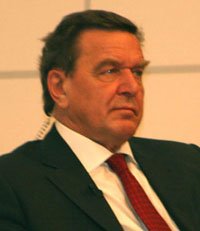
The former German Chancellor Gerhard Schroeder has described the Syrian economy as a promising one in his speech at the opening of the Second Syrian-Emirati Economic Forum in Damascus yesterday.

He also said that the Syrian economy is taking continuous steps towards integration in the world economy.

Sheikh Tarek bin Faysal Al Qasimi, head of Economic development department in Sharjah, stressed in his remarks that oil has contributed in developing economies in the emirates as well as infrastructure development.

Sheikh Al Qasimi stressed that economic growth rate ranges between 1 - 18 per cent especially in tourism, industry, education sectors.

Abdullah Dardari, Syrian deputy prime minister for economic affairs, said: " I cannot imagine investments in Syria without the presence of Emarati investors as well as the presence of Syria's traditional friends in Europe, especially Germany."

Dardari said that Syria's GDP growth rate had reached more than 4.5 per cent due to the stress on macro development in its economic policies.

Dardari said the government's role should be always present to create job opportunities or preparing an economic environment that would indirectly contribute to creating job opportunities, transparent working mechanisms and continuous legislative development that is compatible to modernisation and integration in world economy.-TradeArabia News Service

Wednesday, June 07, 2006

Bahrain appoints first Arab Woman Judge

(AFP), 6 June 2006

MANAMA - Bahrain appointed a woman judge on Tuesday for the first time in its history, becoming the first to do so among the conservative and male-dominated Gulf Arab states.

King Hamad issued a decree appointing Mona Jassem Al Kawari to the civil courts, the official Bahrain News Agency reported.

“I am very proud to be the first woman judge in Bahrain,” Kawari told AFP after her appointment.

“This nomination does not surprise me though because his majesty has been encouraging women since the launch of reforms.”

There are at present two women ministers in the Bahraini government.

Bahraini women only got the vote for the first time in a 2001 referendum on turning the small Gulf archipelago into a constitutional monarchy.

A total of 31 women stood as candidates in municipal and parliamentary elections the following year but not one won election.

The next round of elections is tentatively expected in October but no date has yet been formally set.

Tuesday, May 30, 2006

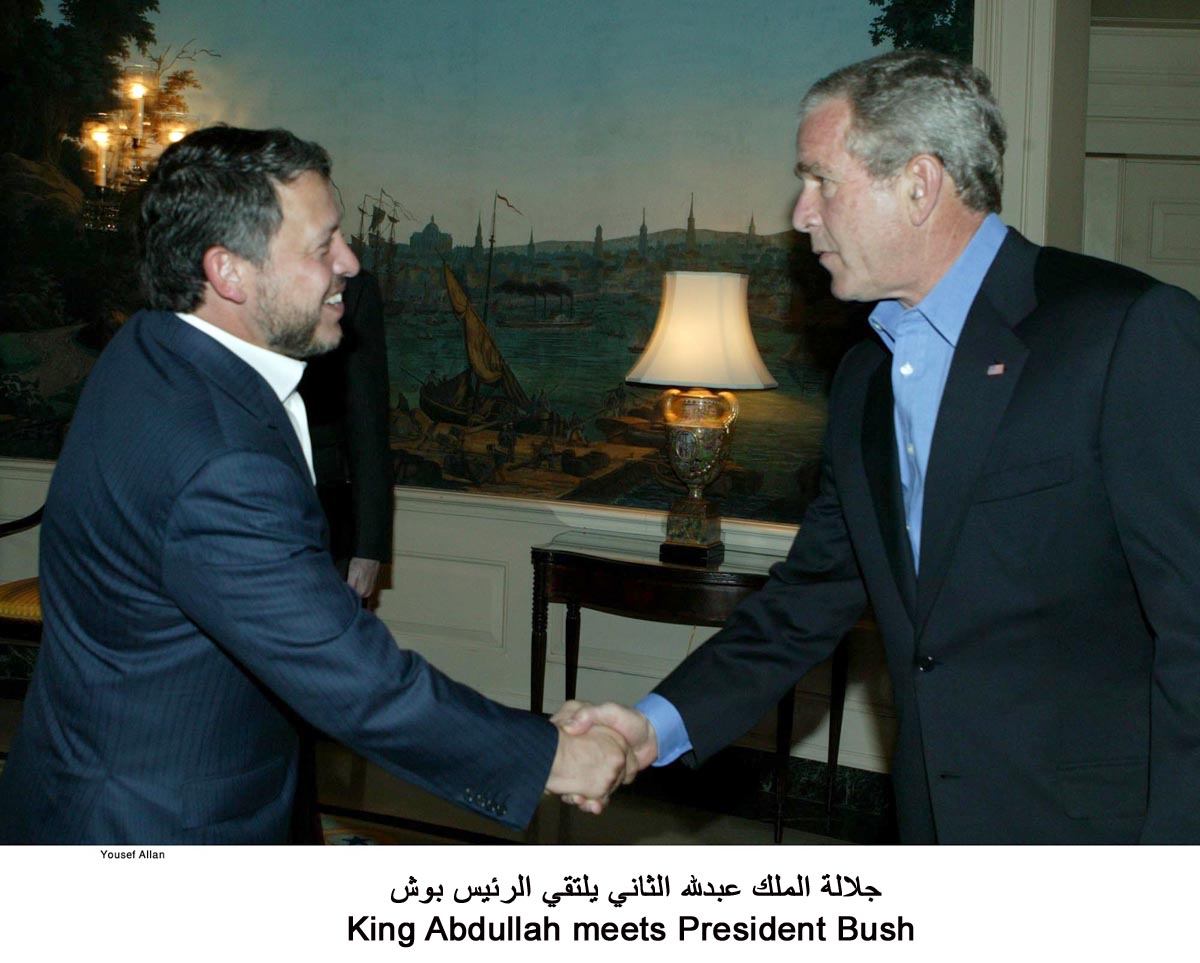
King Abdullah meets President Bush


Washington, DC - May 30 (Petra) -- During a brief visit to the United States, His Majesty King Abdullah met with U.S. President George W. Bush in Washington on Monday evening, May 29th 2006, to discuss bilateral ties as well as latest developments in the Middle East.

His Majesty expressed gratitude for the continued support provided by the United States to Jordan and thanked the President for considering additional assistance to the Kingdom this year, at a time when Jordan's economy is facing many challenges associated with high oil prices.

On the Palestinian-Israeli issue, King Abdullah underlined the importance of moving forward in the pursuit of a two-state solution as outlined in President Bush's vision for peace.

He also stressed the need for both Israelis and Palestinians to resume negotiations as soon as possible and reiterated the need to channel assistance to the Palestinian people in order to avert a humanitarian crisis in the Palestinian territories.

His Majesty also stressed that Jordan will continue to play a key role in moving the peace process forward.

King Abdullah will be meeting with Palestinian President Mahmoud Abbas, as he regularly does, and separately with Israeli Prime Minister Ehud Olmert in the next few weeks.

The King also welcomed the formation of the new Iraqi government as a step forward in establishing peace, stability and security and emphasized the need for an inclusive political process in Iraq.

His Majesty stressed that Jordan will continue to support the Iraqi government and the Iraqi people in achieving their aspirations.

King Abdullah will head to Germany on Friday for talks with Chancellor Angela Merkel on the latest regional developments and means to enhance bilateral ties.

Yemen, Saudi Arabia to sign final border maps this week


MUKALLA, YEMEN - Yemen and its oil-rich neighbour Saudi Arabia are due to sign this week the final maps marking their joint borders after land demarcation was completed, Yemeni officials said Monday.

The officials said the maps would be signed during meetings of the Yemeni Saudi Higher Coordination Council (YSHCC), which is scheduled to begin in the south-eastern Yemeni city of Mukalla on Wednesday.

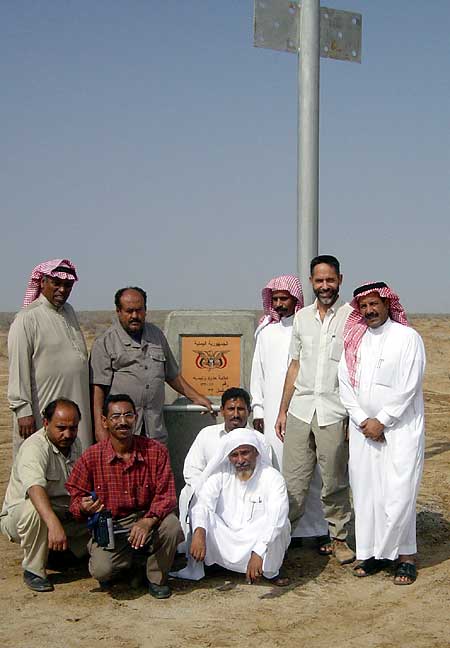
Demarcation of the joint Yemeni-Saudi 1,845-kilometre border was completed in 2004 after 824 markers were put in place. Last April, a German company delivered to the two states the final maps marking the border line based on a 2000 border treaty that ended a long-standing dispute.

The treaty ended a 66-year-old dispute between Saudi Arabia and Yemen over the unmarked borders, including handing over territory to each other as the border demarcation was completed.

On May 16, Saudi Arabia handed over to Yemen the last of 13 border outposts designated as Yemeni territory by the border treaty.

The two-day meetings of the YSHCC are to be co-chaired by the Saudi Crown Prince Sultan bin Abdul-Aziz and Yemeni Prime Minister Abdul-Qader Ba-Jammal.

The meetings would also discuss several issues including economic ties, efforts to fight terrorism and the combat against cross-border drug and arms smuggling and infiltration of terrorists, Yemeni official said.

Large quantities of arms and explosives are smuggled to Saudi territories through the porous border from Yemen every year. (DPA), 29 May 2006